How Blooprint Turned a 14-Day Solo Rust Run Into the Apex Survivor Movie
Need articles like this for your video? They help promote it on YouTube and Google — order them in the Telegram bot @sat_sit_bot. The bot writes and publishes the articles itself (with your YouTube video embedded) on popular topical websites (no ads). Free trial — 50 articles.
· based on the channel Blooprint
Key takeaways
- The movie covers a 14-day solo Rust run cut into a 12-chapter film with a runtime just under five hours.
- Blooprint says filming and editing the project took more than 300 hours on top of the wipe itself.
- A companion site, solosjourneytracker.com, lets viewers enter a timestamp and see the player's progress at that moment.
- The run was published in September 2026 to mark 2.5 million subscribers on the channel.
- Solo Rust survival depends on placement, farm discipline and avoiding fights you cannot finish.
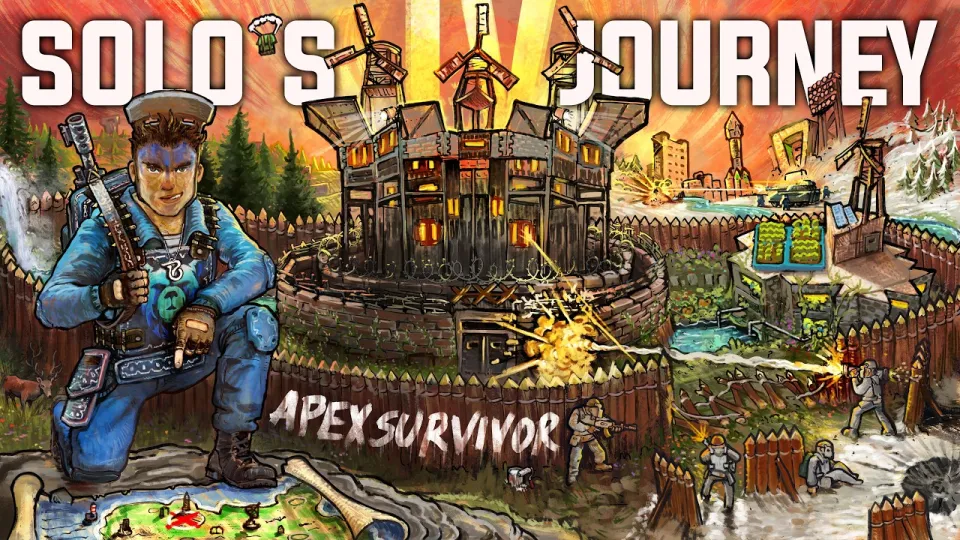
Blooprint's A Solo's Journey IV: Apex Survivor is a feature-length Rust movie built from a single 14-day solo survival run, released in September 2026 to mark 2.5 million subscribers. The film runs just under five hours across 12 chapters and is paired with a companion tracker at solosjourneytracker.com, where viewers type in their timestamp and see exactly what stage of the wipe the solo player had reached at that point. For anyone searching for what solo Rust actually looks like over a long wipe, this is the most complete recent record of it.
What the Apex Survivor run actually covers
The core of the project is one uninterrupted solo wipe, not a highlight reel stitched from many servers. Blooprint states that filming and editing the movie took well over 300 hours, which is why the result behaves more like a documentary series than a gameplay compilation.
The structure follows a numbered chapter format, with the introduction followed by twelve chapters and a closing segment. Each chapter maps roughly to a phase of the wipe: early spawn and first base, expansion and farming, contact with other groups, and the late-wipe raids that decide who keeps their loot. The pacing is deliberately slow in places because a solo run is slow — the film earns its length by showing the boring infrastructure work that makes the big moments possible.
A second layer is the tracker site. Because the movie is long enough to be watched in several sittings, the timestamp lookup turns the video into something you can pause and resume without losing the thread of the wipe.
The solo Rust survival checklist the run is built on
A 14-day solo wipe is won or lost in the first few hours, and the movie's early chapters make that visible. The recurring priorities are practical rather than flashy:
- Spawn and scout. Pick a spawn point with quick access to a road or monument, then move before building anything permanent.
- Starter base first, upgrades later. A small, cheap footprint near a farm route beats a large base that attracts attention before you can defend it.
- Secure a reliable farm loop. Wood, stone, scrap and components need a repeatable route; solo players cannot afford to wander.
- Work the monuments in short, low-risk windows. Oil rig and cargo ship content is lucrative but exposes you to groups, so timing matters more than gear.
- Bank progress. Every crafting bench tier, every blueprint and every box of sulfur is a buffer against a bad night.
- Keep a backup plan. A stash, a secondary base or a hidden sleeping bag turns one wipe into a recoverable setback instead of a dead run.
The film's farm base design drew attention from viewers precisely because it is not a meta build — a compact, awkward-looking layout that still supports cloning and steady production is often the smarter solo choice than a copy of a clan design.
How a solo player handles groups, raids and revenge
Solo Rust is mostly a diplomacy and avoidance game, and the movie treats it that way. Large portions of the run involve reading the map, tracking which clans are active, and choosing when not to engage.
- Numbers change the rules. A solo player who wins a fight against three opponents still has to move the loot, repair the base and survive the response. The film repeatedly shows the cost of a won fight, not just the win.
- Alliances are temporary tools. Informal truces, shared information and one-off cooperation with neighbours can buy time, but they collapse the moment loot is on the table.
- Revenge is a project, not a reaction. When a base gets hit, the response in a long wipe is planned: scout the offender, find the offline window, and bring enough explosives to finish it in one pass.
- Neighbours matter. A quiet, well-defended neighbour is an asset; a bored clan next door is a countdown. Several viewer discussions centre on exactly this — the satisfaction of watching a troublesome group get removed from the map.
Raiding in the film is presented as an economic decision. Sulfur spent on a raid is sulfur not spent on defence, so targets are chosen for what they return, not for how annoying they are.
The production side: editing, soundtrack and presentation
The movie is a solo production credit — filmed and edited by Blooprint — with outside help on the animated intro, thumbnail, cinematic shots, motion design and the tracking website. That division of labour is why a five-hour video still feels edited rather than streamed.
The soundtrack is licensed through Epidemic Sound and Artlist, with additional music from aloneintokyo, and the result is a continuous score rather than a loop of gameplay audio. Motion design and tracking graphics are used to explain map movement and progress, which matters in a game where half the information is spatial.
Hardware notes published with the video describe a Ryzen 7 9800X3D and an RTX 4080, which is the kind of setup needed to record Rust at high frame rates while running a large base and multiple players on screen.
Common questions about long solo wipes
Viewer reaction to the film clusters around a few recurring doubts, and they are worth addressing directly because they apply to any solo player considering a long wipe.
Is a 14-day solo run realistic for a normal player? Yes, but not at the same intensity. The film compresses hundreds of hours of filming into a watchable runtime; a casual solo player can hold a base for two weeks by logging in on a schedule, keeping the footprint small and avoiding fights that invite retaliation.
Why does the video need to be five hours long? Because the interesting part of Rust is the accumulation — blueprints, bases, relationships and grudges. A short edit shows fights; a long one shows why the fights mattered.
Do you need a clan to see oil rig or cargo ship content? No, but you need timing. Monuments are most survivable in off-hours or immediately after another group has cleared them, and a solo player should treat the loot as a bonus rather than a plan.
What makes a base survive a long wipe? Redundancy. Multiple loot locations, a design that is annoying to raid rather than merely large, and enough resources banked to rebuild without starting over.
Useful links
- Solo's Journey progress tracker — enter a timestamp to see the run's state at that moment.
- Blooprint Youtooz vinyl figure — limited run tied to the 2.5M subscriber milestone.
- Blooprint mousepads and playmats at Epic Desk — merchandise collection.
- Hires Studio — animated intro work.
- Veys — thumbnail art.
Final thoughts on Apex Survivor
The value of this movie is that it does not pretend solo Rust is a constant highlight reel; it shows the farming, the waiting, the diplomacy and the occasional catastrophic loss that sit between the big fights. The chapter structure and the timestamp tracker make a five-hour runtime manageable, and the production work keeps it watchable in a way most long-form gameplay is not. For players trying to understand how a single person holds a base for two weeks against groups, it is a practical reference as much as entertainment. The film comes from the Blooprint channel, which has built its reputation on exactly this kind of long-form solo storytelling. If you want to follow the run step by step, start with the progress tracker and watch alongside it.
Source: Rust - A Solo's Journey IV: Apex Survivor (Movie) · Markdown version
Questions & answers
How long is Blooprint's Apex Survivor movie and how is it structured?
It runs just under five hours and is split into an introduction, twelve numbered chapters and a closing segment. Each chapter covers a phase of a single 14-day solo Rust wipe, from the first spawn to the late-wipe raids.
What is solosjourneytracker.com used for?
It is a companion site built specifically for the movie. You enter your current timestamp in the video and it shows the state of the solo run at that exact point, which helps if you watch the film across several sittings.
Can a solo player realistically hold a base for 14 days in Rust?
Yes, with the right priorities: a small, awkward-to-raid base, a repeatable farm route, banked resources and a backup stash. The main risk is not the wipe itself but picking fights with groups that can afford to retaliate.
Is the run a single wipe or a compilation of several servers?
It is presented as one continuous solo survival run across 14 days, filmed and edited over more than 300 hours. The chapter structure follows that single wipe rather than jumping between different servers.